

Masts, towers & digital infrastructure since 1973
We won our first government tender, against the biggest player in the market.
After 40% growth a year with systems that never caught up, CEO Mark Southby used OKR to break ART's reliance on one market and build the next one on purpose.
Tell us about ART.
ART has been making masts and towers since 1973, the kind that measure wind and carry communications. These days we also design, install and maintain the sensing that goes with them: met masts, lidar, sodar, even the systems that monitor birds and bats for environmental approvals. We’ve moved into digital infrastructure too, mainly our modular communications shelter, and our gear’s now in more than 35 countries.
I came in as CEO to modernise and scale the business. We’d grown around 40% a year for five years and the systems had never caught up. Our own success had bred our competition, so trading on our name wasn’t going to cut it anymore. We had to get sharper, more professional, and far less reliant on one market.
What made you decide to explore OKR?
For all that growth, we were running scattergun. See a problem, fix a problem. And nearly all our work, around 90% of it, sat in renewables, so when that market slowed we were exposed. We had to get into new markets, and we needed the whole team pulling the same way to do it.
We’d set plenty of goals before, and they never survived contact with the day job. You leave the meeting full of good intentions, then the work swallows everyone up. I kept hearing about OKR from other businesses that had worked through the same thing, so we decided to give it a proper go.
What was your experience like with OKR Quickstart?
I didn’t have the headspace to figure this out myself and get it right. We wanted people who do this for a living, not a framework we’d half-learn and drop. We talked to a few. The OKR Quickstart team were the standouts, no contest. It’s all they do.
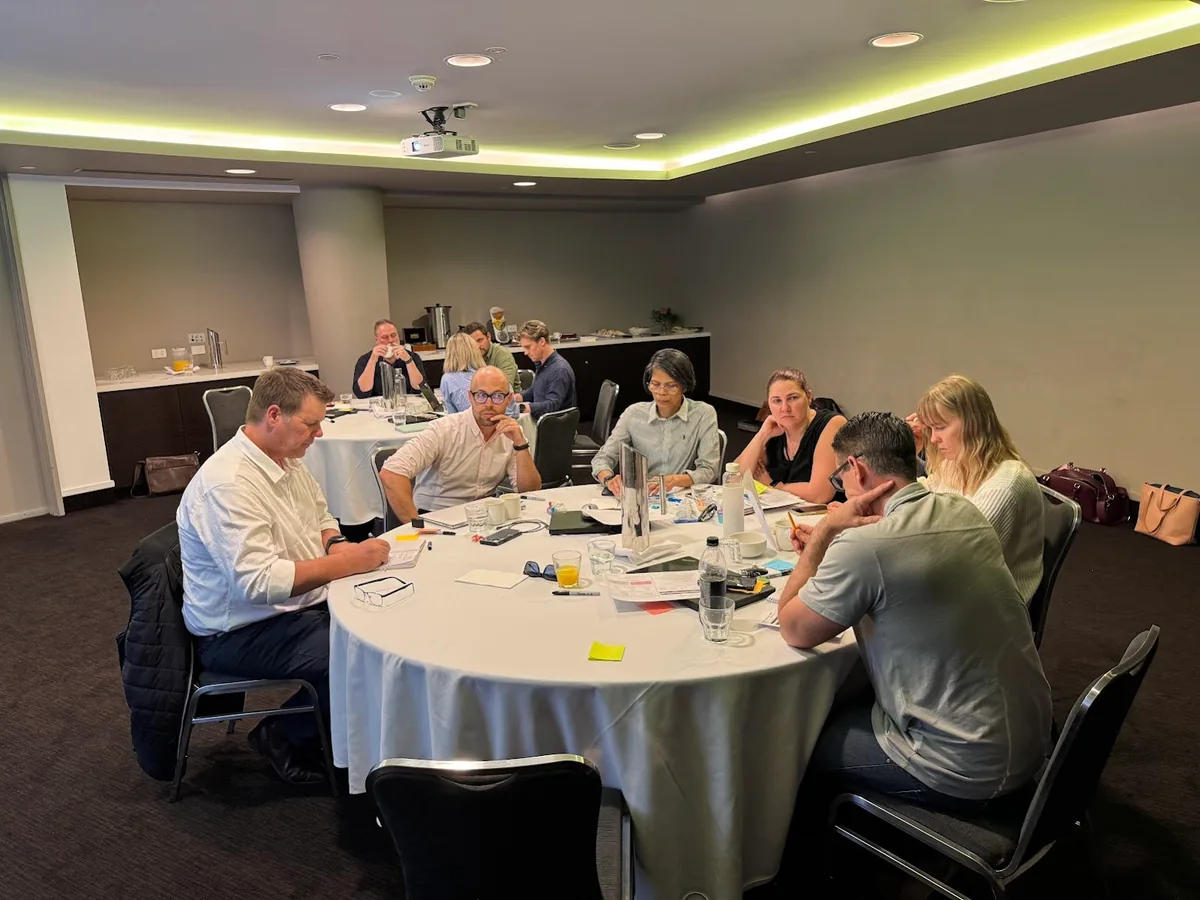
Tim, Peter and Adi ran our bootcamp and the workshops, and they matched the energy of our crew, which matters more than you’d think. The sessions would start a bit clunky, then we’d get going and walk out with something none of us had thought of on the way in.
The best bit wasn’t the workshops though. It was what it did for the team. OKR gave them enough clarity that I could step back and let them run, and they grabbed it. Within a couple of months they were running the weekly meetings themselves, calling out what was off track and holding each other to account. They took on stuff I’d normally have carried, and I wasn’t the one having to push it along every week.
What’s one result you can put down to OKR?
The shelter tender. That’s the one I keep coming back to.
We’d decided we couldn’t keep leaning on renewables, so we threw everything at digital infrastructure and our modular communications shelter. For a comms shelter we wouldn’t have even been on anyone’s radar before. Then we won our first tender, a government one, against one of the biggest competitors in that space. And a government tender isn’t decided on price alone. They weigh up the quality of what you put in front of them. So that one meant a fair bit.
Same stretch, we had a record sales quarter, and once we’d sharpened our pricing we lost just two quotes the whole quarter. The pricing worked, and the confidence in dealing with us worked. We also signed our first wind asset management customer, which proved people would pay for the service, not just the steel.
None of that fell in our lap. Every win was a target we’d set, looked at every single week, and chased till it was done. We stopped waiting for the old market to come back, and built the next one instead.
What advice would you give an exec thinking about it?
Go all in, or don’t bother starting.
The businesses that get nothing out of OKR are the ones treating it like homework on top of the real job. It has to be how you actually run the place.
Get someone outside to keep you honest, because the minute you get busy you’ll let it slide, and a good partner won’t. And listen to Tim on focus. Pick one or two things that genuinely matter and have the discipline to say no to the rest. That focus is hard, and it’s worth more than you’d reckon.
- Company
- ART Group
- Industry
- Manufacturing & infrastructure
- Leader
- Mark Southby, CEO
- Engagement
- OKR Implementation & coaching
Build your next market on purpose.
Like ART, get the whole team pulling the same way and chasing targets you actually review every week. Start with a free strategy call. Tim reads every one.