

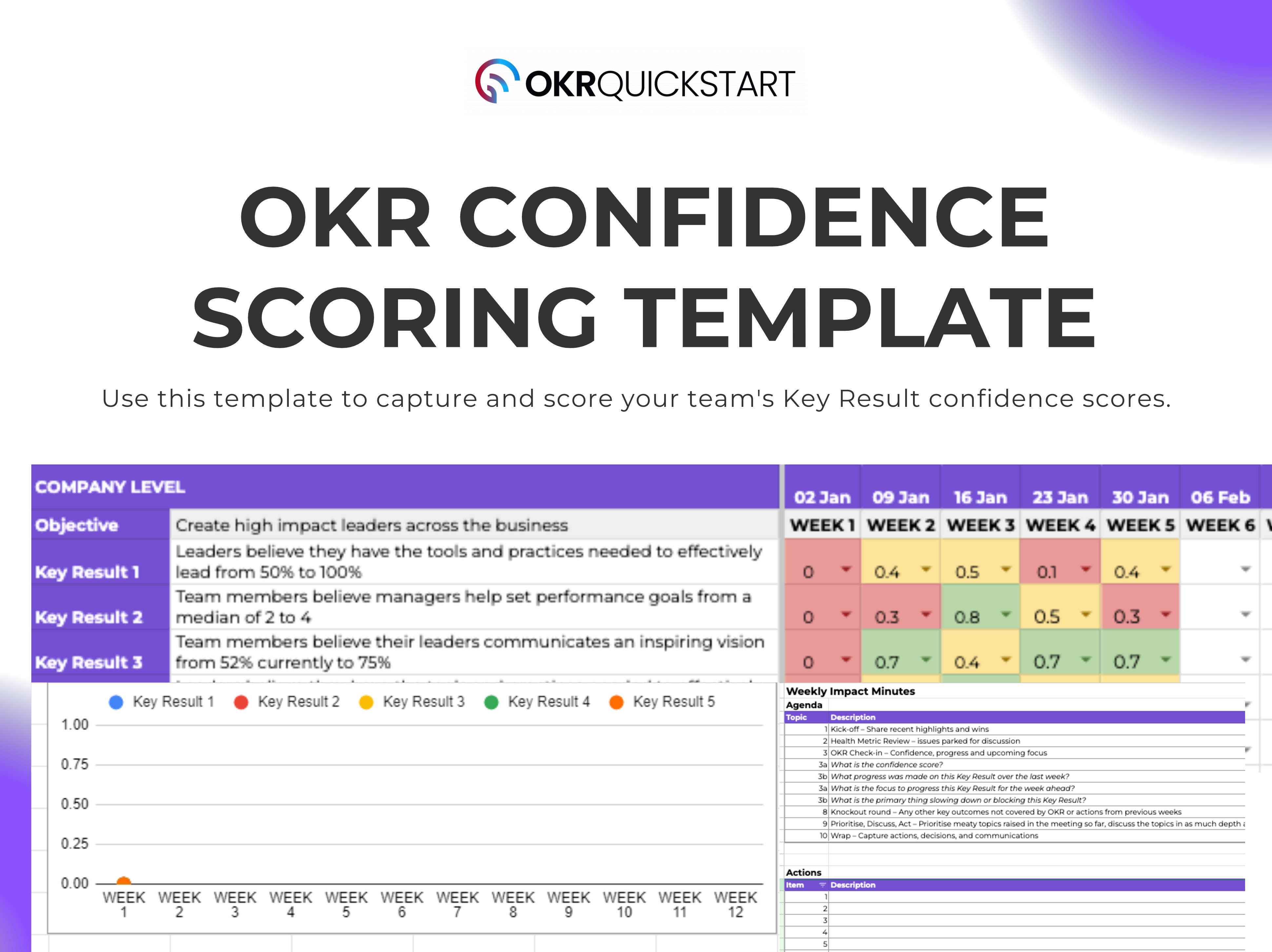
Checking in around your OKR confidence level is a key part of measuring your OKR progress. The OKR Confidence Scoring Template will help you capture and score your team’s Key Result confidence scores and adjust course throughout the quarter as needed.
What is an OKR Confidence and how does the template help?
Confidence scoring helps you and your team discuss your level of certainty that you will achieve your key results by the end of the quarter. By placing a number on your level of confidence, it allows you to think through how you might adjust your pathway forward to raise that confidence level. It’s a data point that will help you and your team align on next steps, problem solve potential barriers and pivot if needed. By checking in regularly on OKR confidence levels, you can get ahead and adjust, before it’s too late.
How to get started with the OKR Confidence level template?
We recommend using the OKR Confidence Level Template at your weekly OKR check-ins. Reviewing your confidence level with your team will be a chance to understand everyone’s perspective, and share ideas to overcome any barriers. The Template will be a guide to help you track your progress throughout the quarter.
Outcomes & Benefits in Understanding OKR Confidence
Ready to start using The OKR Confidence Template? Get ready to see results! Understanding OKR Confidence will help you and your team with:
Identification of Early Issues
Embedding OKR Confidence levels will allow you and your team a process for giving and receiving feedback to identify potential roadblocks and issues.
Enhanced Communication & Alignment
Using the OKR Confidence template will encourage communication across your team, allowing everyone to get on the same page and problem solving together.
Realistic Goal Setting
The OKR Confidence template helps you track progress along the way, setting and meeting realistic goals to achieve your key results.
Data-Driven Decision
The OKR Confidence Score is an important measurement tool to make sure you are making data-driven decisions to drive your business.
Accountability & Motivation
Keep your teams accountable and motivated to discuss both what’s working well, but also current challenges and opportunities to each other out.
Measuring Effectiveness
Integrating OKR Confidence scoring helps you begin to measure your teams effectiveness and increase the likelihood of achieving your key results.
Other Helpful Templates for you
Looking for more OKR Templates? You’re in luck!
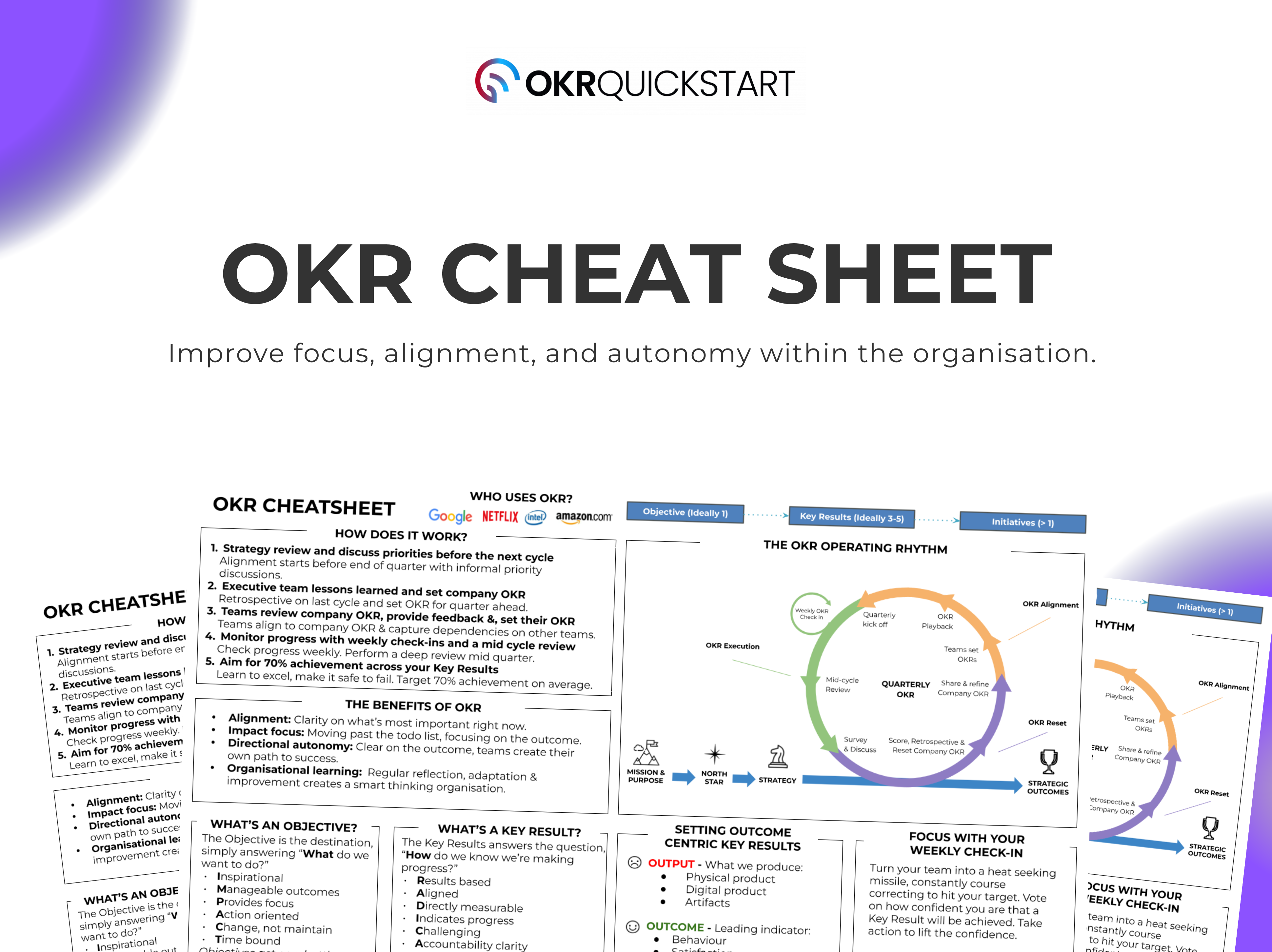
OKR Cheat Sheet
The OKR Cheatsheet brings the core concepts into a simple one pager. Bring it to your next OKR workshop to make OKR setting easy for your team!
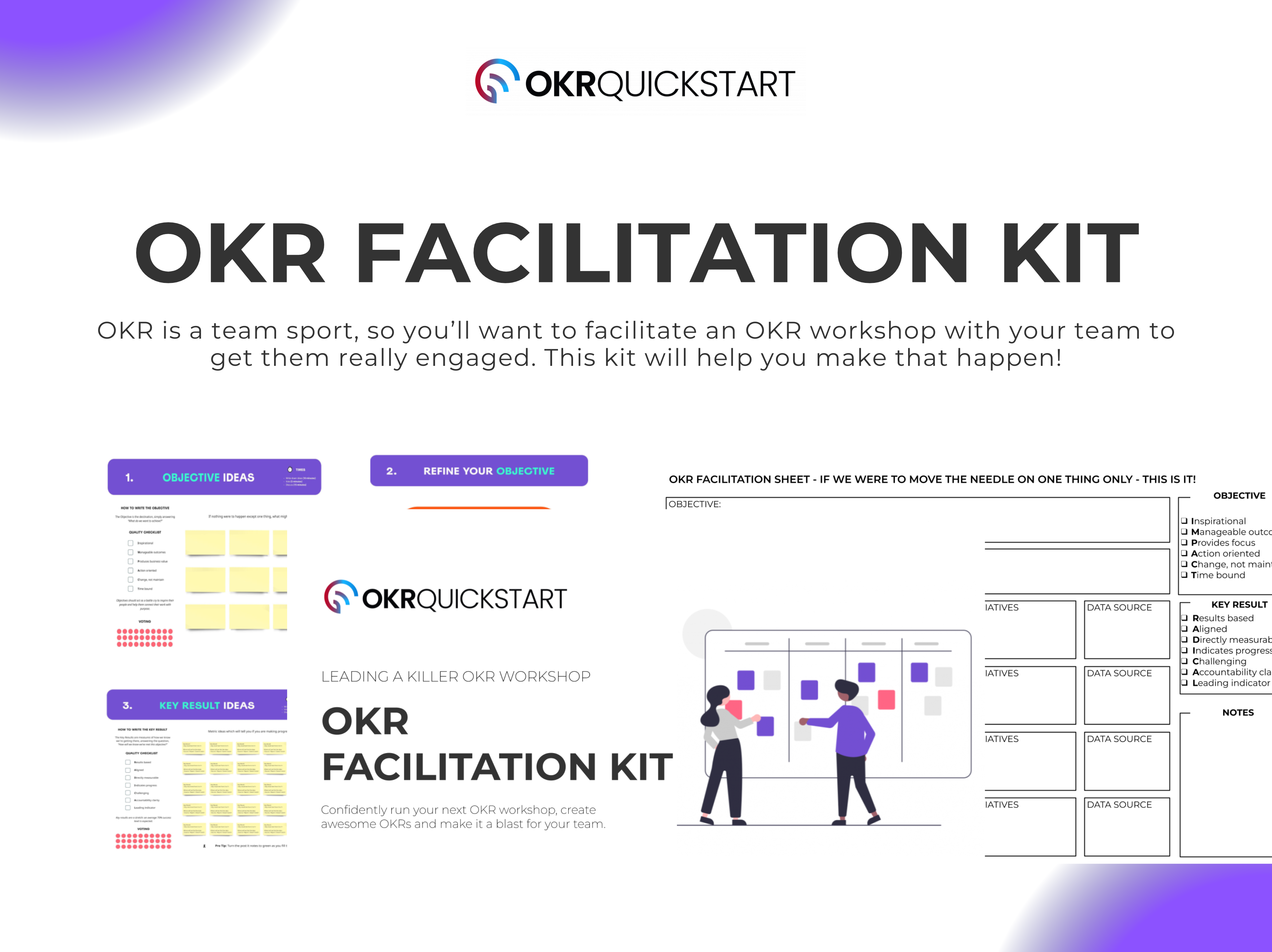
OKR Facilitation Kit
Use the OKR facilitation kit to confidently run your next OKR workshop, create awesome OKRs, and make it a blast for your team.
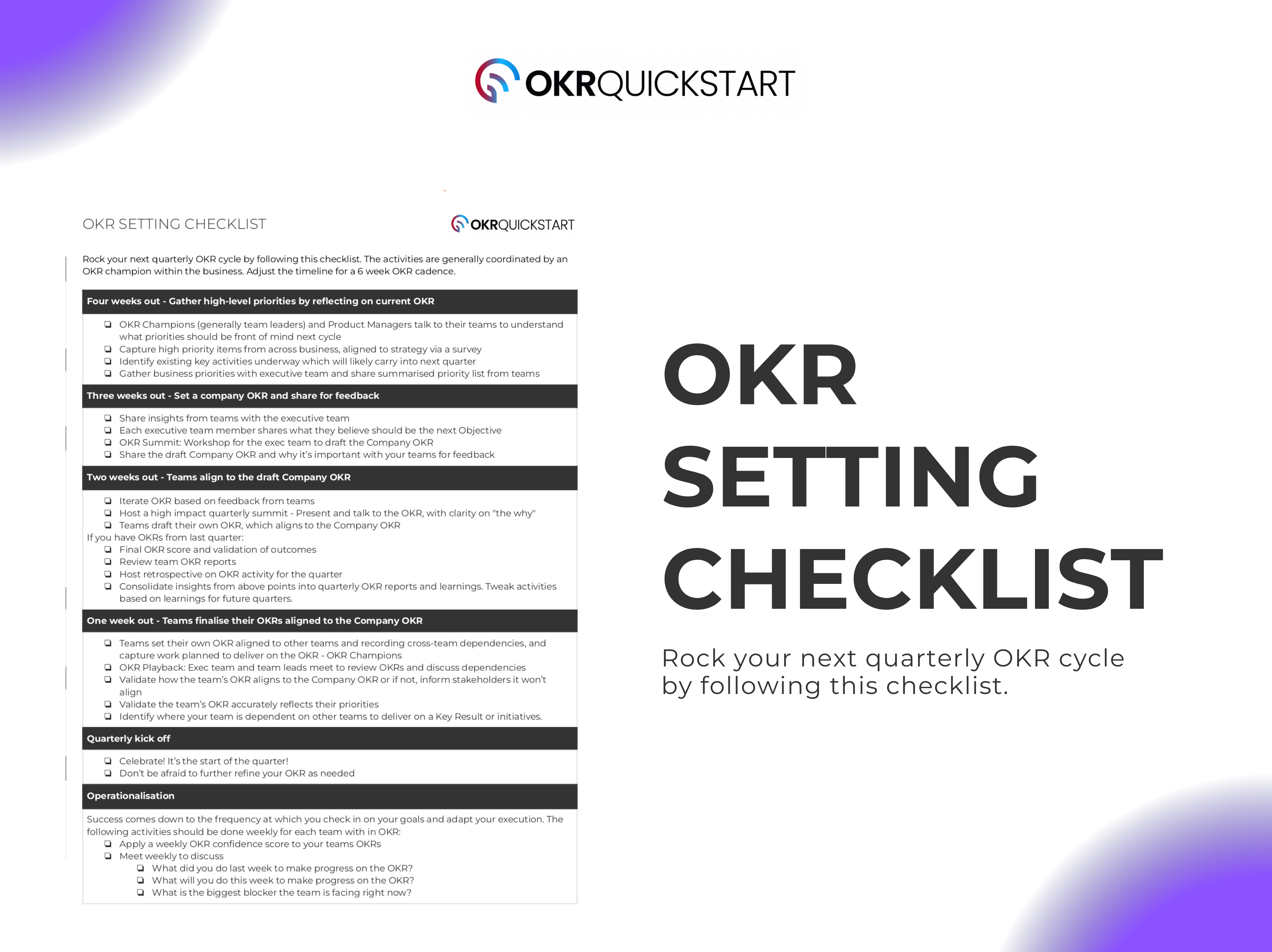
OKR Setting Checklist
Rock your next OKR cycle by following this checklist to create alignment without a top down approach.
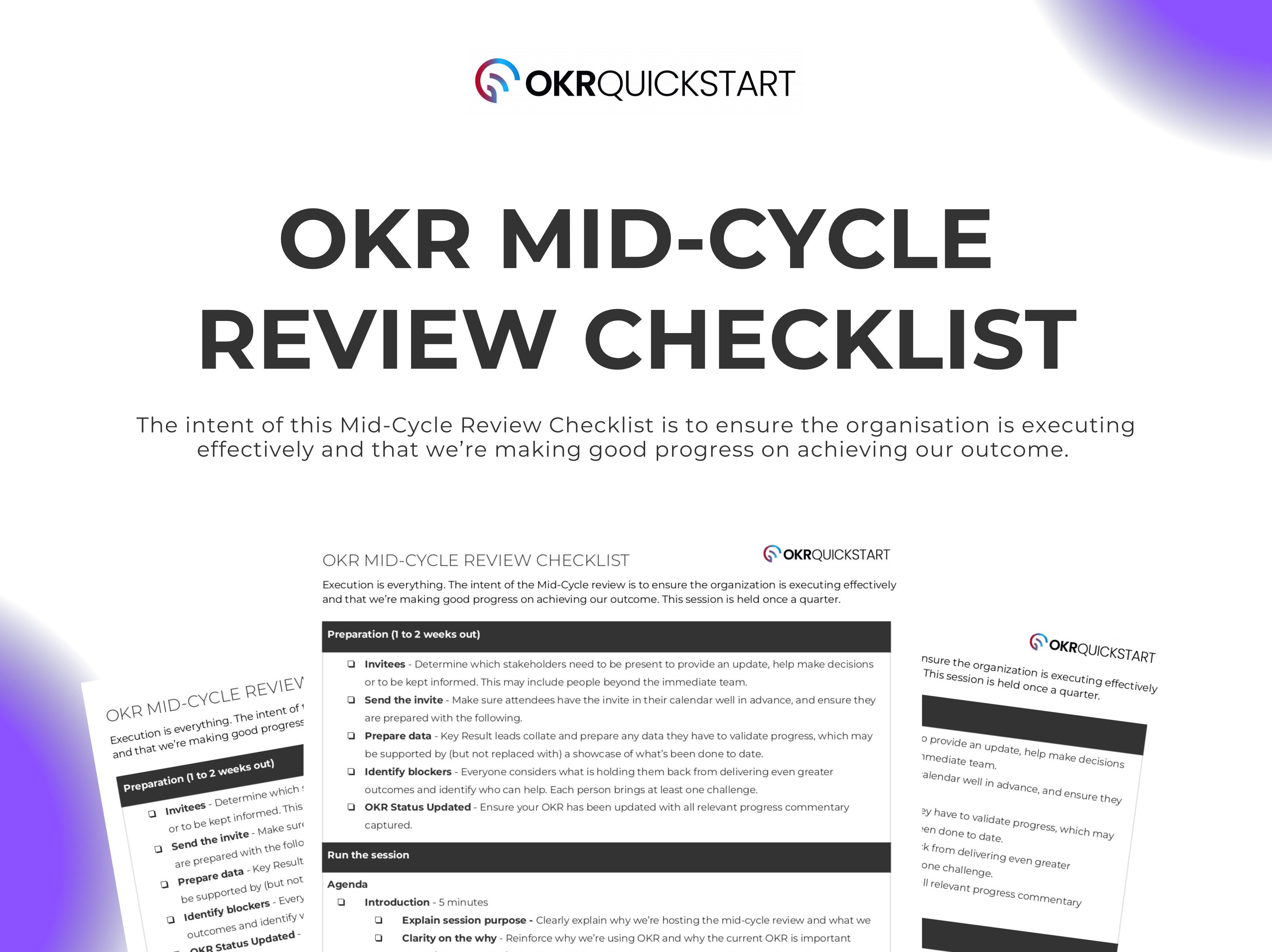
OKR Midcycle Review Checklist
The checklist ensures the organization is executing effectively and that we’re making good progress on achieving our outcome.
Frequently Asked Questions
Related readings
5 Best Practices in Setting Objectives and Key Results
If you want to improve your organization’s performance, you should consider using the Objectives and
Using OKR and CFR in Continuous Performance Management
Objectives and Key Results, or OKRs, are the metrics that may help you achieve your
4 Common OKR Mistakes Your Team Needs to Avoid
Every business that strives to boost its staff’s efficiency and productivity can benefit from implementing
Implementing OKRs in Startups: A Guide for Small Businesses
Setting Objectives and Key Results (OKRs) can keep companies focused and stay aligned on common
Tips to Laying the Foundation for Successful OKR Culture
A growing business will often face a myriad of different challenges before it reaches its
How to Effectively Communicate Key Results to Your Team
The Objectives and Key Results (OKR) approach to goal setting has been used by many
Subscribe To Our Newsletter.
Want more ideas for creating high impact teams & leadership?
Then you’ll love our newsletter!